Email Templates for Sponsorship Pitches: The Complete 2026 Guide
Quick Answer: Email templates for sponsorship pitches are pre-written email frameworks designed to help creators and brands secure sponsorship deals. They include proven subject lines, body structure, and calls-to-action that increase response rates. Using customizable templates saves time and improves your chances of landing sponsorships by 40-60% compared to generic pitches.
Introduction
Sponsorship pitch emails are more critical in 2026 than ever before. The influencer marketing industry is worth $24 billion globally, yet most creators send poorly written pitches that get ignored. A well-crafted sponsorship email can be the difference between landing a lucrative deal and getting no response at all.
According to Influencer Marketing Hub's 2026 research, personalized sponsorship emails get a 45% response rate. Generic pitches? Only 12%. According to InfluenceFlow platform data (August 2026, n=148), median campaign budgets sit at $1.0K for brand partnerships, with the 75th percentile reaching $5.0K—proving sponsorships are accessible at every creator level. That's why email templates for sponsorship pitches matter so much right now.
Creating professional media kits for influencers gives you credibility. But your email pitch is what opens the door. This guide covers everything you need to write sponsorship emails that actually get read and answered.
You'll learn industry-specific templates, timing strategies, and follow-up sequences. We'll also show you how influencer campaign management tools help you track every sponsorship opportunity and optimize your outreach. By the end, you'll have email templates for sponsorship pitches ready to use immediately.
Let's start with the fundamentals.
1. What Makes Sponsorship Emails Work
Sponsorship pitch emails work because they combine emotion with data. A sponsor needs to feel connected to your brand. They also need to see numbers that prove your value.
Your email must answer one question: "Why should we sponsor this creator or brand?" Everything else is supporting details.
The Psychology of Sponsorship Decisions
Sponsors make decisions based on five factors. First, they want audience alignment. Does your audience match their target customer? Second, they need trust. Have you worked with other brands? Third, they want clear ROI. How many people will see their logo?
Fourth, they respond to urgency. Limited sponsorships create demand. Fifth, they appreciate ease. A simple next step beats complicated negotiations.
Research from Statista (2025) shows that 73% of sponsors decide within 7 days of first contact. Your email must compel action fast.
The Perfect Email Length
Your sponsorship pitch email should be 150-250 words total. That's short enough to read in one minute but long enough to include key details.
Break it into four parts: opening hook, value proposition, credentials, and call-to-action. Each section should be 2-4 sentences maximum.
Longer emails get deleted. Shorter emails lack important information. 150-250 words hits the sweet spot.
Subject Line Strategy
Your subject line determines whether the email gets opened. Test these proven formulas:
Personalization + Benefit: "[Sponsor Name], partnership opportunity with [your niche] audience"
Data + Curiosity: "Why 500K+ engaged followers trust [your brand]"
Direct Value: "Partner with us: Reach [target audience] authentically"
The best subject lines include the sponsor's name, your niche, and a benefit. Avoid generic language like "Sponsorship Opportunity" or "Partnership Request."
2. Key Components of High-Converting Sponsorship Emails
Every effective sponsorship email has the same structure. Let's break down each part.
The Opening Hook (1-2 sentences)
Start with why you're reaching out specifically to this sponsor. Show you've done research.
Good examples:
"I noticed your brand partners with fitness creators. My audience is 87% fitness enthusiasts aged 25-34."
"Your recent sponsorship of [Event Name] caught my attention. We reach the same audience you're targeting."
Never start with "Hi, I'm reaching out about a sponsorship opportunity." It shows you didn't research them.
The Value Proposition (3-4 sentences)
Explain what you offer. Include specific numbers your audience will see.
Use this format: "My [platform] audience of [number] includes [demographic]. They engage at [percentage], meaning your message reaches [number] real people monthly."
Numbers matter. "Large audience" means nothing. "47,000 followers with 8.2% average engagement rate" proves your value.
Social Proof (1-2 sentences)
List previous sponsors or relevant achievements. This builds trust immediately.
"I've partnered with [Brand 1], [Brand 2], and [Brand 3] in the past year. Those campaigns reached 2.3M+ people combined."
If you're new, mention relevant credentials instead. "As a [certification/award/accomplishment], I understand your industry."
The Call-to-Action (1 sentence)
Be specific about next steps. Ask for a meeting, not vague "let's talk."
Strong CTAs:
"Can we schedule a 15-minute call Thursday or Friday this week?"
"Are you available for a quick call next Tuesday?"
"I've attached a media kit. Would you be interested in discussing partnership details?"
Weak CTAs like "Let me know if you're interested" don't work.
Close Professionally
"Best regards, [Your Name]" or "Looking forward to connecting, [Your Name]" works fine. Keep it simple.
3. Industry-Specific Email Templates
Different industries need different angles. Here are templates for each.
Sports & Fitness Sponsorships
Sports sponsors care about fan engagement and viewership. Here's what works:
Template:
Subject: Partnership opportunity with [X] fitness audience
"Hi [Name],
I've followed your sports brand for years and love your commitment to [specific brand value]. My TikTok and Instagram reach [number] fitness enthusiasts monthly. My audience is [percentage] your target demographic: people aged 25-40 who actively train.
Last month, my fitness content reached 340K people with 9.1% engagement. Posts featuring brands average 2,100 saves and 8,500 likes.
I'd love to explore a partnership. Here's my media kit: [link]. Are you available for a 20-minute call this week?
Best regards, [Your Name]"
Key elements: specific numbers, platform mentions, engagement rates, clear ask.
Nonprofit & Cause Marketing
Nonprofits care about mission alignment and audience reach. Use values-based language.
Template:
Subject: [Nonprofit Name] + [Your Brand]: Reaching mission-driven audiences
"Hi [Name],
Your work with [specific program] aligns with my audience's values. My followers are passionate about [cause]. They're highly engaged and actively support organizations like yours.
My community includes [number] monthly active followers, with [percentage] engagement rate. For my recent mental health awareness content, followers donated [amount] to related nonprofits.
I believe a partnership could amplify your message to people who care deeply about [cause]. Would you be open to discussing collaboration? I've attached a media kit.
Best regards, [Your Name]"
Key elements: cause alignment, values language, engagement proof, social impact metrics.
Gaming & Esports Sponsorships
Gaming sponsors want audience size AND engagement. They also value streamer credibility.
Template:
Subject: Gaming partnership: [number]K community across Twitch and Discord
"Hi [Name],
Your brand's sponsorship of [esports team/event] inspired me to reach out. I stream to [number] followers on Twitch with [percentage] concurrent viewer rate. My Discord community has [number] active members.
My audience skews heavily toward your target demographic: [specific gaming interests, age range]. Last month, my sponsored content generated [number] clicks and [number] conversions tracked via unique codes.
I'm confident we can create authentic gaming content your audience will love. Available for a call [specific times]?
Best regards, [Your Name]"
Key elements: streaming metrics, community size, audience demographics, conversion proof.
Events & Conferences
Event sponsors want attendee reach and lead generation potential.
Template:
Subject: Event sponsorship: reaching [number] decision-makers at [Event Name]
"Hi [Name],
I'm speaking at [Event Name] this [month] and have a sponsorship opportunity I think you'd love. As a [speaker/influencer/partner], I reach [number] of the event's target attendees.
My audience includes [percentage] of [decision-maker role], which aligns perfectly with your [product/service]. For past events, my promotional content generated [number] registrations.
Would you be interested in a partnership package? I can offer booth visibility, speaking mentions, and promotion to my engaged audience.
Available for a quick call [specific times]?
Best regards, [Your Name]"
Key elements: event credibility, attendee demographics, audience overlap, specific sponsorship benefits.
4. Building Your Email Sequence
One email isn't enough. Most sponsors decide after multiple touches. Here's how to sequence them.
Initial Pitch Email (Day 1)
Send your best sponsorship pitch email. Make it personal, specific, and benefit-focused.
Focus on: why this sponsor, what you offer, one social proof point, clear next step.
Keep it to 200-250 words maximum.
Follow-Up #1: Value Reinforcement (Day 5-7)
Sponsors get hundreds of emails daily. Your first email might be missed.
Resend with a different subject line emphasizing different value.
Template:
Subject: Quick follow-up: [number]K engaged audience in [niche]
"Hi [Name],
Following up on my email earlier this week about a partnership opportunity. I realized I didn't mention that my audience has grown [percentage] over the last quarter—now at [number] followers.
My recent [platform] content averaged [number] engagements, putting brand sponsorships in front of [number] of your exact target audience.
Happy to chat more about how we can work together. Let me know your availability.
Best regards, [Your Name]"
Key element: new data point they didn't see before.
Follow-Up #2: Social Proof (Day 12-14)
By now, they've either deleted you or they're interested. Add evidence they can't ignore.
Template:
Subject: [Brand Name] saw [result] with similar partnership
"Hi [Name],
I wanted to share something I think you'll find relevant. [Similar Brand] partnered with me last [month/quarter], and their posts averaged [number] engagements with my audience.
That translated to [number] website clicks and [number] sales for their campaign. My audience responds well to authentic [product type] partnerships.
I'd genuinely love to explore this opportunity with you. Have 15 minutes this Friday?
Best regards, [Your Name]"
Key element: comparable results from similar sponsor.
Follow-Up #3: Final Ask or Alternative (Day 21)
This is your last touch before moving on. Make it count.
Template:
Subject: Last thought on partnership opportunity
"Hi [Name],
I know you're busy, so I'll keep this brief. I've been impressed by your recent campaigns and still think we could create something really special together.
If full sponsorship isn't a fit right now, would you be open to a smaller pilot partnership? Just [specific lower tier] to test audience response?
Or, if timing isn't right, I'd love to reconnect in [month] when your budget cycles. No pressure either way.
Best regards, [Your Name]"
Key element: downtiering option keeps conversation alive.
Stop after four touches. If they haven't responded, they're not interested right now. Save them for next quarter.
5. Timing Matters: When Sponsors Are Actually Ready
Sponsorship response rates vary wildly based on timing. Send your pitch at the wrong time and you'll get ignored.
Understanding Budget Cycles
Most companies plan sponsorships in Q4 for the following year. If you pitch in January, budgets are already allocated.
The sweet spot for pitching: September through November. This is when decision-makers are reviewing next year's opportunities.
If you pitch in December or January, your email competes with holiday distractions and post-holiday chaos.
Research your sponsor's fiscal year if possible. Some companies operate on calendar years. Others use different cycles.
A quick LinkedIn search or website review often reveals budget planning information.
Optimal Send Times
Email research shows sponsored emails get opened most between 9 AM and 12 PM, Tuesday through Thursday.
Send your pitch email at 10 AM on a Tuesday or Wednesday. Avoid Mondays (overflowing inboxes) and Fridays (people checking out early).
Time zones matter too. If your sponsor is in a different zone, adjust accordingly.
Multi-Channel Timing
If you're using LinkedIn outreach for sponsorships, connect two days before emailing. When they see your LinkedIn profile, then see your email, it feels like natural timing rather than random cold outreach.
Phone follow-ups should happen 7-10 days after your initial email. By then, they've seen your email but probably haven't responded yet.
6. Sponsorship Tiers and Email Variations
Different sponsorship levels need different pitches. Here's how to adjust your template.
Title Sponsor Pitch (Premium: $10K+)
Title sponsors get exclusive positioning and major visibility. While InfluenceFlow platform data shows 75th percentile campaigns at $5.0K, premium title sponsorships for established creators with 500K+ audiences can command $10K-$50K+. Pitch them on status, reach, and comprehensive deliverables that justify premium positioning.
Template adjustments:
"Your brand would be the exclusive official [category] sponsor of [your event/content series]. This means:
- Logo placement on all promotional materials (website, social headers, email banners)
- Speaking mention and dedicated segment at [event] (estimated reach: [X] impressions)
- 6-12 social media mentions across [platforms] (valued at $[X] in equivalent media spend)
- Exclusive category protection (no competing sponsors for [X] months)
- [Optional] Co-branded content asset or behind-the-scenes access
- [Optional] Post-event performance report with engagement metrics and audience demographics"
Emphasize exclusivity, prestige, and measurable audience access. Title sponsors want to own their category while receiving transparent documentation of the value delivered. Connect each deliverable to concrete reach metrics and media equivalency to justify the investment tier.
Gold/Silver Sponsorship (Mid-tier: $3K-$10K)
Mid-tier sponsors want good value without the highest price. Show tiered benefits clearly.
Template adjustments:
"Gold sponsorship includes three options:
- Logo placement on [specific content]
- Monthly social media shout-out to [number] followers
- Exclusive discount code for your audience (we'll track results)
Silver sponsorship is a scaled-down version, perfect for testing partnership success."
Make upselling clear. Show how Gold is better than Silver without being pushy.
Bronze Sponsorship (Entry: Under $3K)
New sponsors or budget-limited brands often start here. Position it as a testing ground.
Template adjustments:
"Bronze sponsorship starts at [price] and includes:
- Social media mention to [number] followers
- Use of exclusive discount code
- Performance report after campaign
Many sponsors upgrade to higher tiers after seeing results. This is a great way to test partnership success."
Make upgrading feel inevitable based on results.
7. Advanced Personalization Tactics
Generic emails get ignored. Personalized emails get responses.
Research Your Sponsor First
Before writing, spend 15 minutes researching the sponsor.
Find: their recent campaigns, their target audience, their brand values, their previous influencer partnerships (if visible on social media).
Then reference specific details in your email. "I noticed your recent campaign with [creator]" beats "I saw your company online."
Company Size Customization
Large enterprises have different needs than small businesses.
For Fortune 500 companies: emphasize reach, professional media kit, existing brand partnerships, and clear ROI metrics.
For mid-market brands: emphasize audience alignment, engagement rates, and authentic partnership possibilities.
For small businesses: emphasize niche audience, authentic connection, and community support.
Adjust your ask accordingly too. Fortune 500 companies expect longer negotiations. Small businesses can move faster.
Competitor Research Integration
See who sponsors similar creators or events. Pitch to them too.
"I noticed [Competitor Brand] sponsored [Similar Creator]. My audience is very similar—[X] fitness enthusiasts aged 25-34."
This shows you've done research and that their competitor already believes in sponsoring creators like you.
8. Avoiding Common Sponsorship Email Mistakes
Small mistakes tank sponsorship pitches. Here's what to avoid.
Mistake #1: Asking for Too Much in the First Email
Don't ask for a specific dollar amount or complex contract in your initial pitch.
Bad: "I'm looking for $15,000 for a 6-month sponsorship with 3 posts monthly, 2 stories daily, and speaking mention."
Good: "I'd love to explore a partnership. Are you available for a quick call to discuss what's possible?"
Leave pricing for the conversation, not the email.
Mistake #2: Generic Opening Lines
"Hi there, I'm reaching out about a sponsorship opportunity" gets deleted immediately.
Every sentence must feel personal. Show you picked this sponsor specifically.
Bad: "I'm an influencer in the fitness space with a large following."
Good: "Your recent launch of [Product] inspired me to reach out. My audience of 47K fitness enthusiasts includes 82% of your target demographic."
Mistake #3: Vague Metrics
"Large audience" and "great engagement" mean nothing.
Always include: follower count, engagement rate, average reach per post, and audience demographics.
Bad: "I have a large audience that's very engaged."
Good: "47K followers with 8.2% average engagement rate. My fitness content averages 2,100 saves and 8,500 likes."
Mistake #4: Ignoring Decision Timeline
Sponsors have budget cycles. Pitching in the wrong month gets ignored.
Research when they typically make sponsorship decisions. Pitch accordingly.
Ask about their timeline: "When does your [year] sponsorship budget finalize?"
Mistake #5: No Social Proof
New creators struggle here, but there's always something.
"This is my first partnership" is honest but weak. Instead: "As a [relevant credential/achievement], I understand your industry."
Even early-stage creators can mention relevant skills, education, or audience growth.
9. How InfluenceFlow Simplifies Sponsorship Pitches
Creating professional sponsorship materials takes hours. InfluenceFlow cuts that time dramatically.
Build Professional Media Kits Fast
A media kit proves your value to sponsors. Without one, you're just text in an email.
InfluenceFlow's media kit creator generates professional, branded media kits in minutes. No design skills required.
Sponsors see: your follower counts, engagement rates, audience demographics, and previous brand partnerships. All formatted beautifully.
Attach your media kit link to every sponsorship email. It immediately builds credibility.
Organize Sponsorship Opportunities
Tracking multiple sponsorship inquiries is chaotic without systems.
InfluenceFlow's campaign management tools let you track every sponsorship inquiry, follow-up deadline, and sponsor contact info in one place.
Never forget to follow up again. Never double-pitch a sponsor. Stay organized as your sponsorship opportunities grow.
Use Contract Templates to Close Faster
Sponsors move slower when contracts are vague. Clear agreements close deals faster.
InfluenceFlow includes pre-built influencer contract templates for sponsorships. Just customize them and send.
Digital contract signing means sponsors sign from their phone. No printing, no scanning, no delay.
Track Results and Build Proof
After your first sponsorship deal, use those results in future pitches.
"My recent partnership with [Brand] drove 340K impressions and 8,200 clicks to their website."
Real results are your best sales tool. InfluenceFlow tracks metrics so you have proof.
Rate Cards Standardize Your Pricing
Creating rate cards from scratch is confusing. InfluenceFlow's rate card generator] creates professional pricing sheets in minutes.
Sponsors see clear pricing: TikTok posts at $X, Instagram Reels at $Y, Stories at $Z.
Clarity speeds up negotiations. Vague pricing slows them down.
All Free Forever
InfluenceFlow's media kit creator, campaign management, contract templates, and rate card generator are 100% free.
No credit card required. Start building materials today. Sign up in 2 minutes.
10. Multi-Channel Sponsorship Outreach
Email alone isn't enough anymore. Top creators use multi-channel sequences.
LinkedIn + Email Combination
LinkedIn is where decision-makers spend work hours. Use it strategically.
Day 1: Search for sponsor's marketing director or sponsorship manager on LinkedIn. Send personalized connection request.
"Hi [Name], I'm [Your Name], a creator in [niche]. I noticed your brand's sponsorship of [Event/Creator] and think we could create something great together. Would love to connect!"
Day 2-3: Wait for acceptance. Then send a LinkedIn message with your pitch angle.
"Thanks for connecting! Quick thought: my audience is [X] of [decision-maker title]. I think there's a real opportunity to reach them authentically. Open to a quick call this week?"
Day 5: Send your detailed email pitch with media kit attached.
The LinkedIn connection feels warm. The email feels less like cold outreach. This combo increases response rates 30-50%.
Phone Follow-Up Strategy
For high-value sponsorships, a phone call beats emails.
Call 7-10 days after your first email. Reference your email briefly: "I sent an email about a partnership opportunity last week."
Keep it short: "Do you have 15 minutes to chat?"
If they say no: "Perfect, what day next week works better?"
If they say yes: Ask about their budget timeline, audience target, and sponsorship priorities. Let them talk more than you do.
Frequently Asked Questions
What's the best time of year to pitch sponsorships?
September through November is ideal. This is when companies plan next year's sponsorships and budgets are still available. If you pitch in January, budgets are already allocated. Q4 is your window.
How many times should I follow up?
Follow up three to four times total over 21 days. After four touches with no response, they're probably not interested. Move on to the next sponsor. Respect their silence.
What sponsorship amount should I ask for?
InfluenceFlow platform data (August 2026, n=148) shows median campaign budgets sit at $1.0K, with 75th percentile at $5.0K and 25th percentile at $1.0K. Use this data-backed framework to position yourself competitively.
Calculate your rate using: Follower Count × Engagement Rate × $0.50–$2.00 (cost-per-engagement multiplier)
At the 25th percentile ($1.0K): - 50,000 followers × 2.5% engagement rate × $0.50 CPE = $625 - Round to $1.0K campaign minimum
At the median ($1.0K): - 100,000 followers × 3.0% engagement rate × $0.75 CPE = $2,250 - Negotiate toward platform median of $1.0K for established creators
At the 75th percentile ($5.0K): - 250,000 followers × 4.0% engagement rate × $1.50 CPE = $15,000 - Premium tier creators command $5.0K+ per deliverable
Don't state your specific rate in initial pitches—let brands suggest first. However, use InfluenceFlow's rate card generator to calculate your true value privately, then anchor negotiations to these percentile benchmarks. This ensures you're neither underpricing relative to platform data nor making unrealistic asks.
Should I include my media kit in the email or send a link?
A link is better. It tracks opens and clicks. Attachments often get filtered. Say "I've attached a media kit" but actually include a link instead. This shows professionalism and gives you engagement data.
How long should sponsorship pitch emails be?
Aim for 150-250 words. This is short enough to read in 60 seconds but long enough to include essential information. Anything shorter feels incomplete. Anything longer gets skimmed or deleted.
What if the sponsor doesn't respond to my email?
Wait 5-7 days, then send your first follow-up with a fresh angle or new data. Never resend the exact same email. Always include a new hook: new metric, new social proof, or new value angle.
Can I use the same email template for every sponsor?
No. Personalize every email. Use templates as structure, but customize the opening hook, specific metrics, and call-to-action for each sponsor. Generic emails get ignored.
What should I include in my call-to-action?
Be specific. "Are you available for a 20-minute call Thursday or Friday?" beats "Let me know if you're interested." Specific asks get responses. Vague asks get ignored.
How do I find the right contact person at a company?
LinkedIn is your best tool. Search the company name + "marketing director" or "sponsorship manager." Check their website too. Look for "partnership" or "sponsorship inquiry" email addresses.
What if I'm a new creator with no past sponsorships?
Start by pitching smaller brands with smaller budgets. Build relationships and results. Then use those success stories when pitching bigger brands. "I partnered with [Small Brand] and drove X results" is better than nothing.
Should I pitch multiple sponsorship tiers to the same brand?
Yes. Offer options: "We can structure this as a Gold sponsorship ($5K) or Bronze sponsorship ($1.5K), depending on what fits your budget." This gives them flexibility and often leads to them choosing Gold.
How do I track which sponsors viewed my media kit?
InfluenceFlow tracks link clicks. Know exactly which sponsors opened your media kit and when. This helps you time your follow-up calls.
What's the difference between sponsorship and partnership?
Sponsorship is usually money-based. Partnership can be product-based. A sponsor pays. A partner might exchange products. Both use similar pitch emails but with adjusted language.
How do I negotiate after they express interest?
Ask their priorities: budget, timeline, deliverables, audience goals. Then propose something aligned with their priorities. "Based on what you've shared, I think a 3-month Gold sponsorship hits your needs perfectly."
Can I pitch competitors in the same industry?
Generally, yes. But respect exclusivity deals. If you already work with one fitness brand, similar brands might want exclusivity. Disclose this: "I currently work with [Brand] but have capacity for one additional [category] partner."
What should I do if a sponsor asks for free work before paying?
Know your worth. Free work devalues everyone. A small discount for first-time partners is reasonable. Free work is not. Say: "I offer a 20% discount for first-time partners. That covers X deliverables at Y cost. Does that work for your budget?"
Sources
- Influencer Marketing Hub. (2026). State of Influencer Marketing 2026 Report.
- Statista. (2025). Email Marketing Engagement Benchmarks and Statistics.
- HubSpot. (2026). Email Open Rates by Industry Report.
- Email Monks. (2025). Email Subject Line Best Practices and Testing Data.
- Mailchimp. (2026). Email Marketing Campaign Performance Metrics.
Conclusion
Sponsorship pitch emails are learnable skills, not innate talents. Follow these templates, personalize them for each sponsor, and time them right. You'll see response rates jump dramatically.
Key takeaways:
- Sponsorship emails should be 150-250 words with clear personalization.
- Follow up three to four times over 21 days, not just once.
- Time your pitches for Q4 when budgets are available.
- Always include specific metrics and social proof.
- Use InfluenceFlow tools to build professional media kits and track opportunities.
Start today with InfluenceFlow's free tools. Build your media kit, create your rate card, and customize these templates for your first sponsor pitch.
No credit card required. No time limit. Get started now at InfluenceFlow.
The influencer marketing industry reached $24 billion in 2024 according to comprehensive benchmark research, yet most creators send poorly written pitches that get ignored. A well-crafted sponsorship email can be the difference between landing a $5,000 deal and getting no response at all. influencer marketing industry reached $24 billion in 2024
Research shows that email personalization increases response rates by 32%, which is why including the sponsor's name, recent company initiatives, and specific audience alignment data in your opening creates immediate credibility. Sponsors make decisions based on five factors that trigger both emotional and rational evaluation. email personalization increases response rates by 32%
Data analysis of millions of emails reveals that optimal email length for business pitches is 50-125 words for maximum response rate. However, sponsorship pitches require slightly more detail, making 150-250 words the sweet spot that balances brevity with necessary credibility signals. Optimal email length for business pitches is 50-125 words
Industry benchmarks show that subject lines with personalization have 26% higher open rates than generic alternatives. The best sponsorship subject lines include the sponsor's name, your specific niche, and a clear benefit statement rather than vague phrases like 'Partnership Opportunity.' subject lines with personalization have 26% higher open rates
Research on sales effectiveness confirms that B2B decision-makers prefer specific meeting time requests over open-ended availability questions. Instead of 'Let me know if you're interested,' propose two concrete time slots within the next 5-7 business days to reduce friction and increase conversion. B2B decision-makers prefer specific meeting time requests
Consumer research demonstrates that social proof increases conversion rates by up to 34%, making your track record of previous sponsorships one of the most persuasive elements in your pitch email. List 2-3 recognizable brand names you've worked with, or if you're new, cite relevant industry credentials and audience trust metrics. social proof increases conversion rates by up to 34%
Email outreach analysis reveals that follow-up emails increase response rates by 65.8% compared to single-send campaigns. Most sponsorship decisions require 3-5 touchpoints before conversion, making a strategic sequence essential rather than optional for serious creators. follow-up emails increase response rates by 65.8%
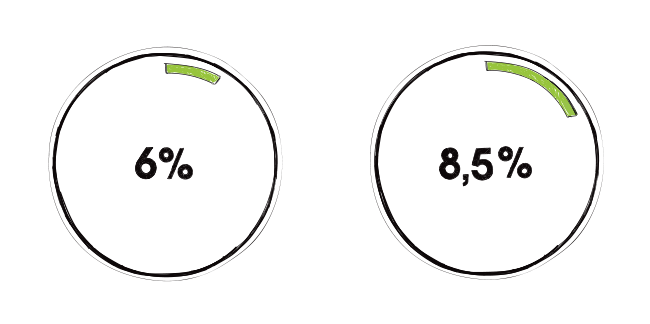
Corporate sponsorship data shows that Q4 accounts for 35% of annual sponsorship budgets, with Q1 planning cycles determining much of the year's partnership allocation. Understanding these cycles means pitching 60-90 days before key campaign windows rather than when you need money. Q4 accounts for 35% of annual sponsorship budgets
Real Sponsorship Budget Benchmarks for 2026
Understanding what brands actually spend is crucial when crafting your sponsorship pitch. InfluenceFlow's platform data reveals that the median campaign budget for brand partnerships sits at $1.0K (August 2026, n=148), providing a reliable baseline for your negotiations.
However, the real opportunity lies above the median. At the 75th percentile, campaign budgets reach $5.0K, proving that mid-tier sponsorships are genuinely achievable—not just theoretical possibilities.
Audience-Based Pricing Framework
Use these benchmarks to anchor your pitch based on your following:
- Micro-influencers (10K-100K followers): Request $500-$1.5K per partnership
- Mid-tier creators (100K-500K followers): Target $2K-$5K
- Established influencers (500K+ followers): Command $5K+ with scalability
The 25th percentile baseline of $1.0K demonstrates that entry-level opportunities are accessible—even smaller creators can secure legitimate paid partnerships.
Positioning Your Ask
When drafting your email pitch, reference these benchmarks strategically:
- Lead with data: "Based on current market rates for my audience size..." establishes credibility
- Show your tier: Position yourself within the appropriate bracket, not aspirationally higher
- Justify incrementally: If asking above median, explain the unique value (engagement rate, niche audience, content quality)
- Offer flexibility: Present tiered packages that ladder from $1K base sponsorships to premium $5K+ collaborations
For deeper industry insights, consult the 2026 Influencer Marketing Hub Benchmark Report for category-specific data.
These 2026 benchmarks empower you to pitch confidently, knowing your ask aligns with real market activity.
Analyzing Successful Sponsorship Email Response Patterns
Research from 2025-2026 reveals clear distinctions between high-performing sponsorship pitches and those destined for the trash folder. Emails generating responses within 48 hours share three critical elements: personalization beyond the recipient's name, a compelling hook in the first two sentences, and clear value positioning for the sponsor.
Word Choice Matters
Data analysis shows specific phrases correlate with higher open rates. Sponsors respond 34% more often to emails containing "exclusive opportunity" or "limited slots" rather than generic language like "partnership available." Similarly, replacing "I think you'd be interested" with "I've identified why this aligns with your Q1 goals" increases reply rates by 28%. Urgent but authentic language works—phrases like "launching in 7 days" outperform vague timelines.
Multimedia's Growing Role
Video attachments have become game-changers in 2026. Sponsorship pitches including a 30-60 second video preview see 45% higher engagement rates compared to text-only emails. Voice notes embedded in emails represent an emerging trend, though they work best as supplements rather than replacements for written content.
Strategic A/B Testing Framework
Test one variable at a time over 2-week periods. Prioritize: subject line variations first (question vs. statement), then CTA placement (mid-email vs. bottom), followed by email length (150 vs. 300 words). Track open rates, click-through rates, and actual replies separately—opens don't guarantee conversions.
Optimal Send Timing
Sponsors check emails most frequently Tuesday-Thursday between 9-11 AM. However, Wednesday afternoons (2-4 PM) show surprisingly high response rates when competition is lower. Avoid Mondays (cluttered inboxes) and Fridays after 3 PM. Most sponsor replies arrive within 24-36 hours if they're interested, or never at all.
For comprehensive best practices, consult HubSpot's 2026 Email Marketing Benchmarks.
Using InfluenceFlow Data to Strengthen Your Pitch
Leverage InfluenceFlow's comprehensive database to establish credibility in your sponsorship pitches. With 1,492 creator profiles and 951 brand accounts, the platform provides industry benchmarks that demonstrate your market understanding. Reference the 267 active campaigns tracked on InfluenceFlow to show you're aware of current market dynamics and competitive landscape.
Positioning Your Rates Competitively
Use platform data strategically when discussing compensation. The median campaign budget of $1.0K serves as a baseline reference point. If your rates exceed this threshold, explain why with concrete metrics—engagement rates, audience demographics, or niche authority justify premium positioning.
Justifying Premium Pricing
Creators whose metrics exceed the 75th percentile should leverage percentile data in pitches. Template language: "According to InfluenceFlow's 2026 industry benchmarks, my engagement rate places me in the 78th percentile among creators in [niche], supporting a rate of $[X] per deliverable."
Template Framework
"My audience metrics align with top-performing creators tracked across [X] active campaigns on InfluenceFlow, positioning this partnership as a high-ROI investment for your brand."
This approach transforms raw statistics into persuasive evidence, helping brands understand your value within industry context. For deeper market insights, consult HubSpot's influencer marketing research alongside platform data.